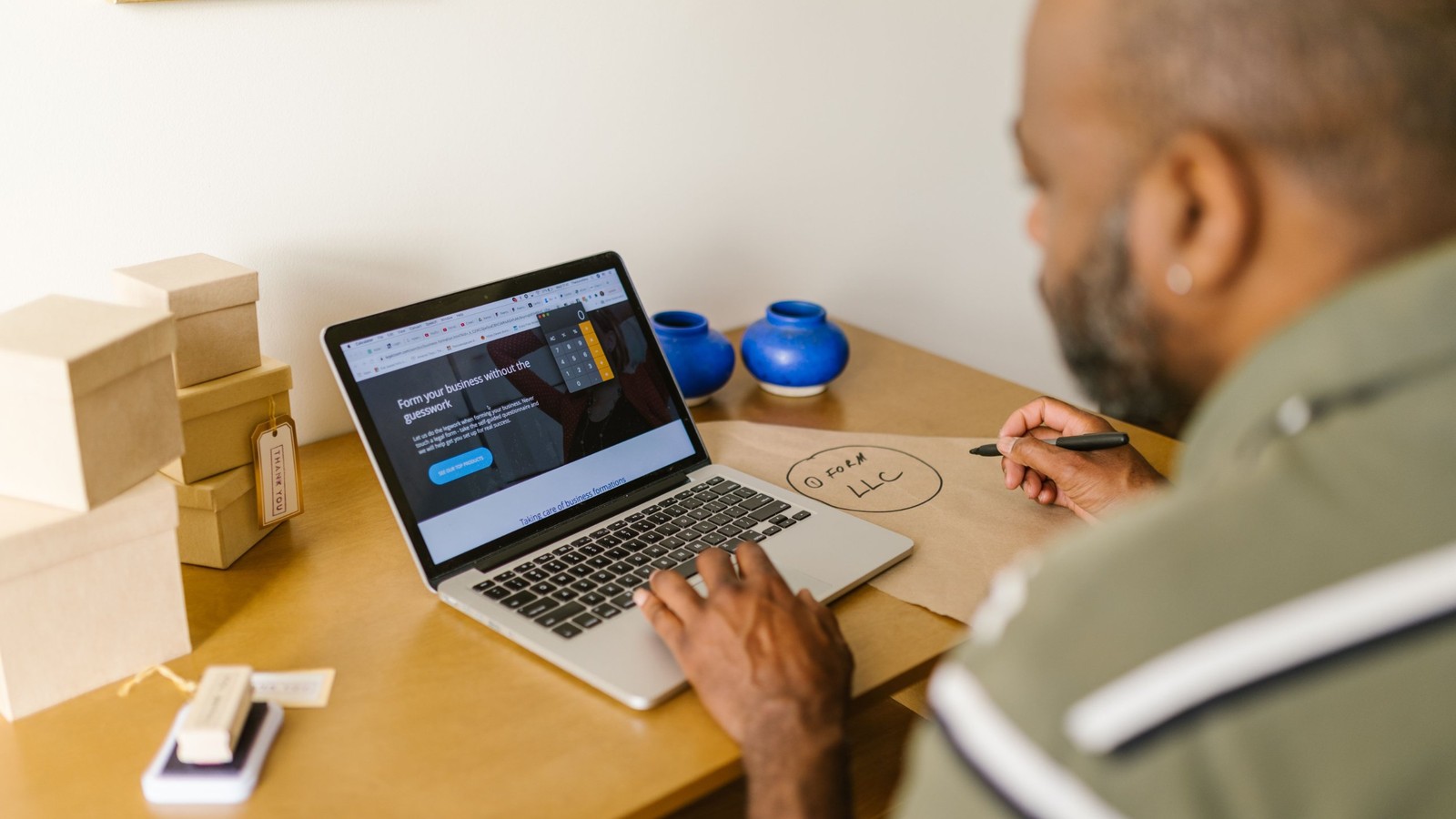
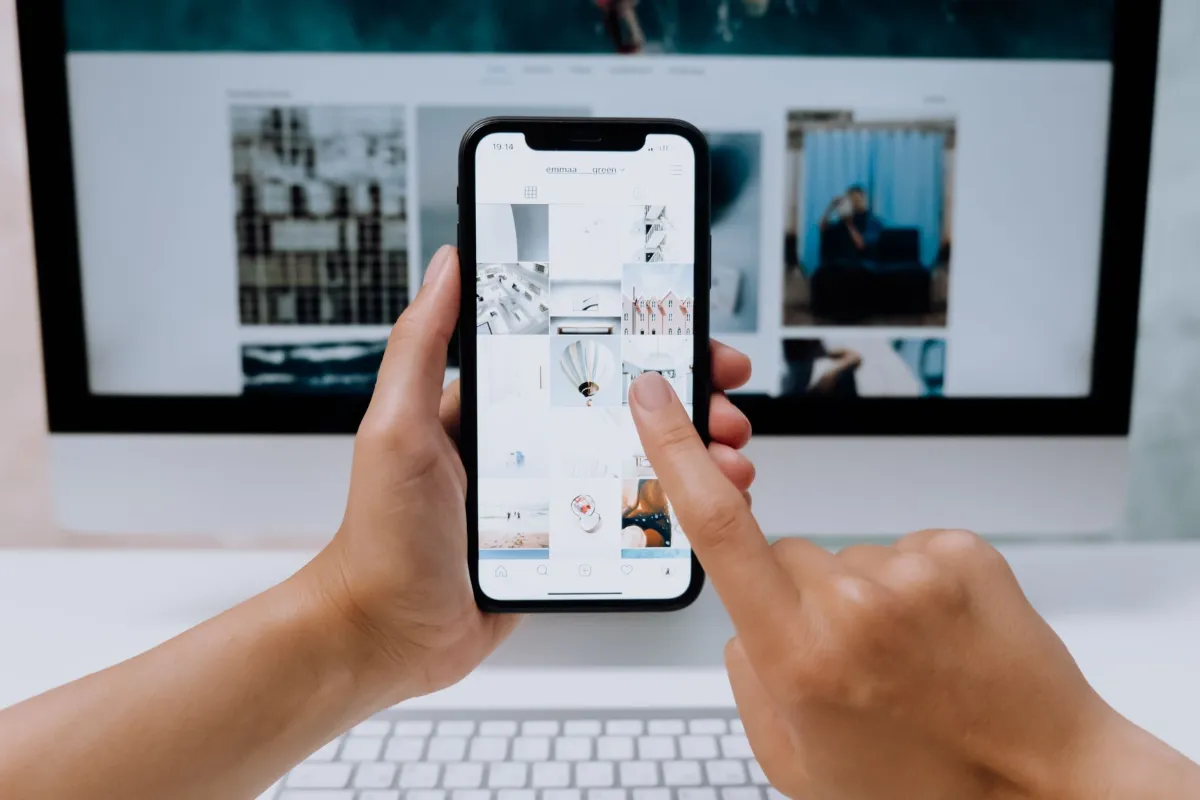
A great picture of a business owner at work, taken by RDNE Stock project on Pexels.
Prefer to listen? Here are the key points from me in under a minute.
Read the transcript
Hi, Joshua here. In this article I talk about whether you still need a website when you’ve already got a Facebook page or a Google profile. This is what I know. Your profile helps people find you, but your website is usually where they decide whether to trust you. With money as tight as it is in South Africa right now, people check you out properly before they spend. You also don’t own your Facebook page. Meta does, and if it gets hacked or shut down, years of work can disappear overnight. There are exceptions, and restaurants are the big one, because most people decide straight from the Google profile. For most businesses, though, the best setup uses all of them together. If you’d like to learn more, keep reading.
In short
- Most businesses still need a website, even with a Facebook page and a Google Business Profile.
- Your profile gets you found. Your website is often the first impression, and it’s where people decide whether to trust you.
- You don’t own your Facebook page, so it’s risky to build your whole business on it.
- In a tough economy, careful customers check you out before they spend, and a good website gives them what they need.
- A small business website needs clear pricing (or how pricing works), service pages, area pages, a contact page and an About page.
- The best setup uses all three: a Google profile, social media pages and a website working together.
Yes. If you’re asking “do I need a website for my business?”, the answer is almost always yes, even if you already have a Facebook page or Google Business Profile. Those profiles help people find you, but your website is where they decide whether to trust you. There are a few exceptions, like restaurants, where your Google profile does most of the work.
I get asked this a lot, usually by business owners who have a busy Facebook page and a Google profile with a few good reviews, and who are wondering whether a website is worth the money. Here’s my honest take, including when you can get away without one.
Not sure if your business needs a website yet? I offer SEO services in Durban, including websites built to rank, with a free first chat.
The short answer
Yes, you need a website most of the time. A Facebook page and a Google Business Profile are both worth having, and they help people find you. But a website does things neither of them can: it gives you full control over how your business is presented, it builds trust, and it’s the foundation of getting found on Google and AI tools.
The main exception is businesses where people rarely look past the profile, like most restaurants. I cover that further down.
What a Facebook page does well
A Facebook page is a great way to stay in touch with people who already know you. It’s good for:
- sharing updates, specials and behind-the-scenes posts
- building a community around your business
- answering questions through Messenger
- showing your personality, which can be very nurturing for customer relationships
It’s free, quick to set up and familiar to most South Africans. For keeping existing customers engaged, it’s hard to beat.
What your Google Business Profile does well
Your Google Business Profile is what puts you on Google Maps and in the local results when people search for things like “electrician near me”. It shows your reviews, hours, phone number, photos and directions right in Google.
Google says businesses with complete and accurate information are more likely to show up in local results. For a lot of local businesses, it’s the single most important thing to get right. I go into detail in how to show up in “near me” searches.
Why a Facebook page isn’t enough on its own
Facebook is built for scrolling through a feed, and very few people go there to search for a service provider. When someone types “plumber in Pinetown” into Google, they’re rarely shown a list of Facebook pages. They’re shown map results from Google Business Profiles and normal results, which are mostly websites.
Facebook also controls how your page looks and how many people see your posts. You can’t organise your information the way you’d like, explain your services in depth, or easily guide someone from “just looking” to “ready to book”.
You don’t own your Facebook page
This is the one people don’t think about until it’s too late. Your Facebook page lives on Meta’s platform, under Meta’s terms. If your page gets hacked, restricted or shut down, or if Meta changes how pages work, you can lose years of work overnight.
Your website is different. You own your domain and your content. Whatever happens on social media, your website is still there, still showing up on Google, and still bringing in enquiries.
Your profile gets you found, your website gets you chosen
Your website is most often the first impression someone has of your business. And right now, that first impression matters more than ever.
South African households are under pressure. The FNB/BER Consumer Confidence Index was still in negative territory, at -13, in the third quarter of 2026, and FNB expects shoppers to stay cost-conscious. When money is tight, people are careful about who they work with. They check you out before they spend.
A Google profile with a handful of reviews, or a Facebook page with some posts, often isn’t enough to give people the trust they need. Your website is a huge trust signal. Without one, you can lose customers who simply couldn’t find enough reassurance to pick up the phone.
What does a website do that the others can’t?
Getting featured on Google and AI tools is a big part of it, but it isn’t the only job your website does. A good website takes people through the whole journey of becoming a customer:
- Awareness: it helps people find you and learn about things that are relevant to them, through your service pages and articles like this one.
- Consideration: it helps them weigh up their options, with clear information about what you do, how you do it and what it costs.
- Conversion: it gets them to take the next step, whether that’s making a purchase, booking an appointment or visiting your business.
A Facebook page can do some of that. A website does all of it, in a well-organised place where you have total control over how everything is presented. It’s also what search engines and AI tools lean on most when deciding whether to recommend you. I explain why in how to get your business found on ChatGPT and other AI tools.
When is a Facebook page or profile enough?
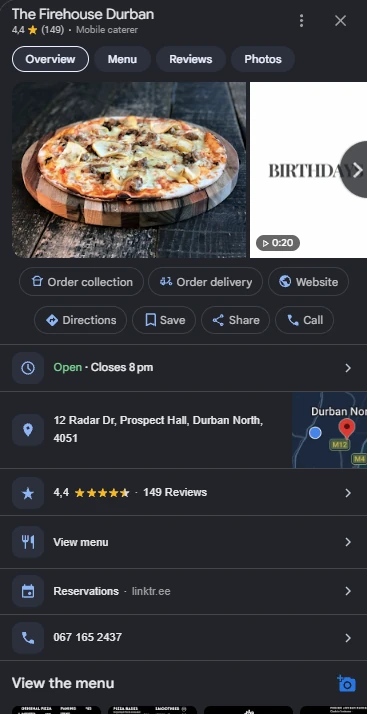
There are businesses where social media or a Google Business Profile does most of the heavy lifting. Restaurants are the best example.
When people choose a restaurant, they usually decide from the Google profile: the photos, the reviews, the opening hours and the directions. They don’t always visit the website unless they want to see the menu, or they’re conscious about something like the ingredients used. So for restaurants, the Google Business Profile remains the most important thing, and the website is more secondary.
The same goes for some very visual businesses that sell mainly through Instagram or TikTok. Even then, a simple website is still worth having as a home base you control.
What does a small business website actually need?
A small business website doesn’t need to be huge, but it does need all the fundamentals. People should be able to learn what you do, decide whether they want you to do it, and see that other people have trusted you before.
Pricing, or how your pricing works
People need to understand what they’re paying. If you can’t list fixed prices, at least explain how pricing is decided. I don’t publish set packages myself, because every business needs a different amount of work, but my website explains why and what happens next.
Key service pages
Give each main service its own page. Explain what you do, how you do it, how long you’ve been doing it and who you’ve helped before. Google’s guide to helpful content rewards pages that genuinely help people, and your own experience is the easiest way to show that.
Area pages
If you serve specific areas, create pages that talk about them, so people know where you work. I have pages for each area I cover, like SEO in Umhlanga.
A contact page
Make it easy to get hold of you. Your phone number, WhatsApp, email and address (if you have one) should be easy to find on every page, with a dedicated contact page as well.
An About page
People want to know who they’re dealing with. Your About page is where they learn about you, your story and what you stand for.
That matters more than many business owners realise. Conscious consumers are a growing group. People want to know if you’re eco-friendly, how you treat your staff, or what your business stands for, and some go out of their way to support businesses with a particular mission. In a nationally representative YouGov survey of South Africans, analysed by consumer research agency KLA, 72% said they don’t mind paying more for products that are better for the environment. If your business has a story like that, your About page is the place to tell it.
Proof that you’re good at what you do
Reviews, testimonials, before-and-after photos and short case studies all help people trust you. Your website lets you present them properly, instead of hoping people scroll far enough on Facebook to find them.
How much does a basic website cost?
It varies a lot. A do-it-yourself website builder can cost very little upfront, but it takes your time, and the result often isn’t built with SEO in mind. A professionally built website costs more, but it should be fast, easy to use and set up to rank from day one.
Good websites take a lot of thinking: user experience, design, page speed, image optimisation and content. Google’s guidance on page experience says it wants to reward websites that give people a good experience. I don’t publish set prices, because every business needs something different, but I’m happy to give you a clear quote after a free chat.
Use all three together
The best setup uses all three, each for what it does best:
- Google Business Profile: gets you found in local searches and on Google Maps.
- Facebook page: keeps you in touch with existing customers and builds community.
- Website: builds trust, explains what you do properly and turns visitors into customers.
Link them to each other, keep your details the same everywhere, and send people to your website when they want to know more. For the bigger picture, read how to get your business found online.
Want a website that’s built to be found? WhatsApp me for a free first chat.
Questions Durban business owners ask about websites
Can I be on Google without a website?
Yes. A Google Business Profile is free and doesn’t need a website, and it can get you into the map results. But without a website, you’ll struggle to show up in Google’s normal results, and you’ll miss out on the trust a website builds. More on ranking in how to get found on Google.
Does Google give you a free website?
Not anymore. Google used to let businesses create a simple website from their Business Profile, but it turned those websites off in 2024. If you need a website now, you’ll need to build one yourself or have one built.
Is a one-page website enough?
It’s better than nothing, and it can work for a very small business with one service. But a one-page website makes it hard to rank for different services or areas, and it limits how much you can explain. Most businesses do better with separate pages for each main service.
Will a website help my Facebook page?
Yes, they work well together. You can share your website’s articles and service pages on Facebook, and link to your Facebook page from your website. Your website gives your social posts somewhere useful to send people.
Need a website that works as hard as you do?
I build websites for Durban businesses that look good to customers and make sense to Google, with the SEO in place from day one. Your first chat with me is free. I’ll look at what you have now and tell you honestly whether a new website is worth it. You can see how my SEO and website services work, or learn a bit more about me.