
A beautiful picture of a seedling taking root, taken by Jahra Tasfia Reza on Pexels.
Prefer to listen? Here are the key points from me in under a minute.
Read the transcript
Hi, Joshua here. In this article I talk about how long SEO takes to work. This is what I know. Most businesses see real results somewhere between four months and a year, and in my experience, months four to six are when things really start to move. Some websites even show up in the first month, especially in quieter industries. Your competition sets the pace more than anything else. If your competitors have had someone working on their SEO for years, you’re catching up on all of that. You also don’t have to wait for the phone to ring to know it’s working. Google Search Console is free, and if your impressions are climbing, you’re on the right track. If you’d like to learn more, keep reading.
In short
- SEO usually takes four months to a year to really pay off, and the biggest movement often comes between months four and six.
- Some websites start showing up in the first month, especially in less competitive industries.
- Google needs to trust your website and people need to like it. Both take time to build.
- Competition, content, links from other websites and your site’s technical health decide whether you land at the faster or slower end.
- Local SEO can move quicker with a steady stream of reviews and a Google Business Profile you update regularly.
- Google Search Console shows you whether SEO is working long before the enquiries arrive.
SEO usually takes four months to a year to really pay off, and in my experience the biggest movement happens between months four and six. The honest answer, though, is that it takes as long as it takes. Your industry’s competition and the health of your website both shape the timeline, as does the amount of work you put in.
I know “it takes as long as it takes” sounds like a bogus answer. It isn’t meant to be. SEO is an extremely variable space, and anyone who gives you an exact date without looking at your business and your competitors is guessing. What I can do is walk you through what usually happens, month by month, and what speeds things up or slows them down.
Want a realistic timeline for your business? I offer SEO services in Durban with a free first chat.
The short answer: four months to a year
Most businesses should expect to wait a few months before SEO brings in steady enquiries. Google says the same. In its official video on how to hire an SEO, Google explains that SEOs usually need four months to a year to implement improvements and see a benefit.
Treat that as a rough guide. I’ve had websites start showing in search results within the first month. Duguza Pest Control, a Durban business whose new website I built, was ranking for 29 search terms in South Africa about eleven weeks after launch, and was already being quoted as a source in Google’s AI Overviews. On the other hand, a business in a crowded industry can wait the best part of a year before the big results come through.
Why doesn’t SEO work overnight?
Because Google has to trust your website before it sends people to it, and trust takes time to earn.
When we talk about SEO, we’re mostly talking about Google. It handles about 92% of searches in South Africa. AI tools like ChatGPT are starting to take a slice of that, and I’ll get to them later. Google’s goal is to keep people using Google, so it only wants to show results it’s confident will help them.
Google publishes guidelines on what it looks for: trust signals like links from other websites, high-quality original content, and a site that’s fast and comfortable to use. Boil it all down and two things need to be true:
- Google must trust your website.
- People must like it.
The second one matters more than most people think. When people like your content, they spend more time on it and engage with it, and Google notices. It says it uses anonymised interaction data to judge whether its results are relevant to a search.
None of that exists on day one. A new page has no history, no links and no visitors, so Google has very little to go on. Ranking new pages is getting harder, too. An Ahrefs study found that only 1.74% of newly published pages reached Google’s top 10 within a year.
What happens in month one
Month one is about getting the foundations right. Don’t expect much traffic yet, but everything that follows depends on this work.
It usually looks like this:
- an audit to find what’s broken or holding your website back
- technical fixes so Google can find and read every page
- keyword research, so each page targets what your customers actually type in
- setting up Google Search Console and Google Analytics so we can measure progress
- getting your Google Business Profile complete and accurate
If your website is new, Google also has to discover and index it. Some pages can start appearing for less competitive searches surprisingly quickly. That’s a great early sign, but it isn’t the finish line.
Months two to three: fixes and new content
This is when the work starts showing up in the data, even if it isn’t showing up as enquiries yet.
Pages get rewritten so they answer questions clearly. New content goes up to cover what your customers search for. Pages get linked to each other so Google understands how they fit together, and work starts on getting your business mentioned on other websites and local directories.
Over time you build up more pages, more content and more references. Each one gives Google another reason to trust you. In Search Console (an SEO tool created by Google), you’ll usually see impressions (how often you appear in search results) climb before the clicks follow.
Months four to six: the first real movement
In my experience, months four to six are where you see the biggest movement. Rankings for your main search terms start to climb, more people find your website, and enquiries begin to come through.
It won’t be a straight line, though. Rankings bounce around while Google works out where you sit against your competitors, particularly on newer websites. You need to be ready to ride the waves. Enjoy the highs, act on what isn’t working, and be patient during the lows.
Six months and beyond: where it starts to build on itself
After six months, SEO starts to compound. Everything adds up: more pages, more content, more people discovering and engaging with your site, more optimisation and more references from other websites.
Together, that makes a website Google is comfortable serving to its users. It’s also why SEO is such a good long-term investment. Unlike ads, the page you published in month three can still be bringing in enquiries years later, without you paying for every click.

What makes it faster or slower?
A handful of things decide whether you land at the quick or slow end of the scale.
How competitive your industry is
This is the big one, and it’s quite logical. If your competitors have been doing SEO for years, with people like me working on their websites, they’ve built up a lot of authority and have strategies in place. You’re competing with all of that. A business in a quieter niche can move far faster than an attorney or estate agent in a busy suburb.
How old your website is
Site age used to be treated as a core ranking factor. It isn’t anymore. Asked whether domain age matters, Google’s John Mueller gave a one-word answer: no. What does matter is everything that tends to come with age: time to build content, earn links, optimise pages and gather real engagement. An old website that’s been left alone won’t beat a newer one that’s well looked after.
Your content
Original, helpful content that answers what people are searching for ranks faster than thin pages that repeat what’s already out there. Google’s guide to helpful content asks whether your content offers original information, research or analysis. Your own experience is the easiest way to make sure it does.
Links from other websites
Links and mentions from trustworthy websites work like references. Google says one of the ways it judges quality is whether other prominent websites link or refer to the content. Good references take time to earn, and they can’t be rushed or bought.
Your website’s technical health
If Google can’t crawl your pages properly, or your site is slow and awkward on a phone, everything else takes longer. Fixing technical problems early is often the quickest way to stop holding yourself back.
Is local SEO any quicker?
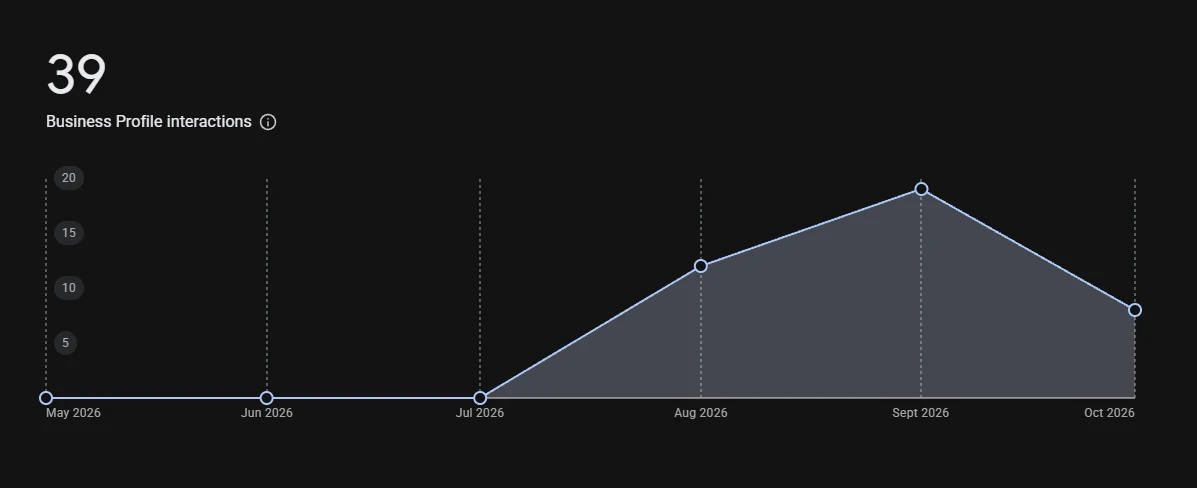
It can be, depending on how you do it. If your customers search for things like “plumber near me”, a lot of your visibility comes from your Google Business Profile, and that can move faster than your website’s rankings.
Google says local results are mainly based on relevance, distance and prominence, and that more reviews and positive ratings can help your local ranking. With reviews, the count and the quality both matter, and so does getting new ones regularly.
Don’t ask your entire client list from the last five years for a review in one week. You want a steady stream of reviews over time, because that’s what builds trust. Make a habit of asking every customer. Google’s review policy doesn’t allow businesses to selectively ask for positive reviews or offer anything in exchange for them.
Beyond reviews, regularity is everything:
- fill in every section, including your services and the right categories
- post updates a couple of times a week, sharing content from your website
- add new photos that are relevant to your customers
- keep your details matching your website exactly
- stay within Google’s guidelines
If you do this consistently for two months, getting reviews every week, posting a couple of times a week and keeping your profile fully optimised, I’d argue you can start showing up in local results. Perhaps even sooner if your industry isn’t very competitive. I go into more detail in how to show up in “near me” searches.
How can you tell it’s working before the leads come in?
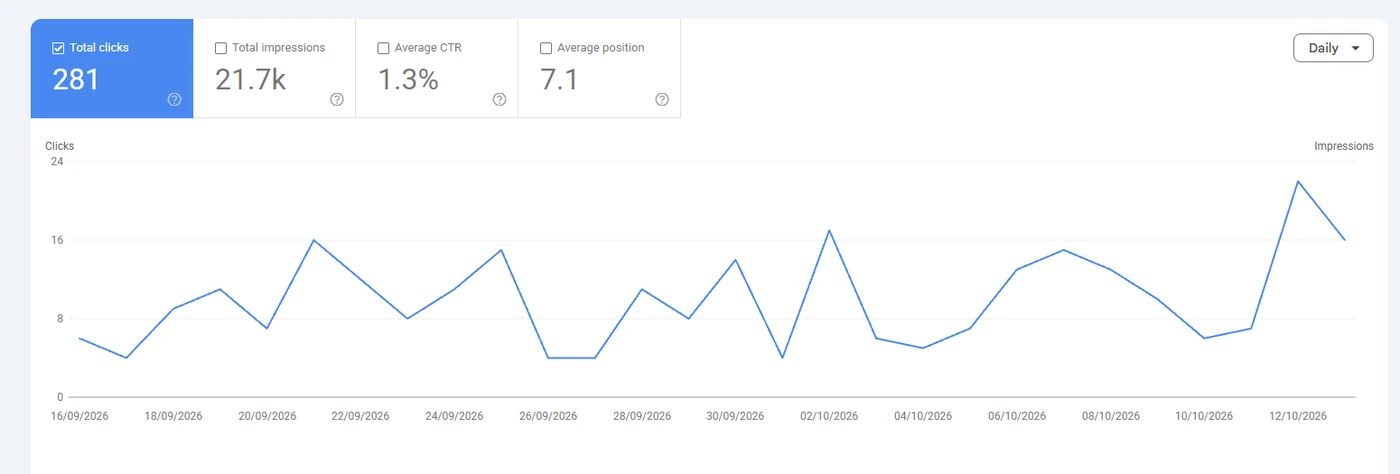
Look at Google Search Console. It’s free, and it shows how your website is doing in Google long before the phone starts ringing.
In the Performance report, keep an eye on:
- Impressions: how often your pages appear in search results
- Average position: roughly where you rank
- Queries: how many different search terms you show up for
- Clicks: how many people visit your website from Google
Impressions usually rise first, then positions improve, then clicks follow. If those numbers are heading up, SEO is working, even if the enquiries haven’t caught up yet.
When should you be worried?
Be worried if you’ve had six months of consistent work and nothing has moved at all: no rise in impressions, no new search terms and no improvement in position.
Also be careful if whoever is doing your SEO:
- can’t explain what they did each month
- only reports on rankings for terms nobody searches for
- promises a guaranteed number one spot
- builds links on websites that have nothing to do with your business
Drops along the way aren’t always a red flag. Google updates its systems regularly, and rankings can shift for reasons that have nothing to do with you. Google says that after a core update it can take several months for its systems to recognise that a site has improved.
Do you ever get to stop?
You can, but your rankings won’t stay put forever. Your competitors keep working, Google keeps changing, and information on your website goes out of date.
Once you’re ranking well, though, the work changes. It becomes less about building and more about maintenance: keeping content fresh, fixing issues as they pop up, and earning new reviews and references. With the right maintenance, your website becomes a long-term asset that keeps bringing in business for years.
What about showing up in ChatGPT?
The good news is that the same work helps you there too. Large language models like ChatGPT, Claude and Gemini learn from huge archives of the web, such as Common Crawl. But when you ask one of them about a local business, it usually runs a live web search first.
Those live searches lean on search engines. Google’s own AI features, like AI Overviews and AI Mode, use Google Search. OpenAI says ChatGPT search partners with other search providers, and Claude has been reported to use Brave Search.
So in practice, a website that ranks well and that search engines trust is far more likely to be found by AI tools too. Search is still paramount, and so is genuine, people-first content, even in the age of AI. I cover this properly in how to get your business found on ChatGPT and other AI tools.
Not sure where your website stands right now? WhatsApp me for a free first chat.
Questions Durban business owners ask about SEO timelines
Does a brand-new website take longer?
Usually, yes. A new website starts with no content history, no links and no visitors, so Google has less to go on. That said, a new site built properly from day one can move surprisingly fast. Getting the structure and content right at launch is what gave Duguza Pest Control its head start.
Why did my rankings drop after going up?
It’s normal, especially on newer websites. Rankings move around while Google works out where you belong, and its regular updates shift things too. Look at the trend over a few months rather than week to week. If a big drop lasts, Google suggests checking your content against its guidance on core updates.
Can ads fill the gap while I wait?
Yes, and for some businesses it’s the smart move. Google Ads can bring in enquiries from day one while SEO builds in the background. The catch is that ads stop working the moment you stop paying. If ads make more sense for you right now, I’ll tell you. There’s more on budgets in how much SEO costs in South Africa.
Can anyone guarantee page one?
No. Google says no one can guarantee a #1 ranking. Anyone who promises a guaranteed spot or a fixed date is either guessing or using tactics that could get your website into trouble.
Want to know how long it will take for your business?
Every business is different, so the most useful timeline is one built around your website, your industry and your competitors. Your first chat with me is free. I’ll look at where you are now and tell you roughly what to expect. If SEO isn’t the right move yet, I’ll say so. You can also see how my SEO services work, or read how to get found on Google for the basics.